ServicesWindow Replacement
Window Replacement in Kirkland
We replace drafty, fogged and worn windows with new units set square, flashed and sealed by hand. The sill, the frame and the last bead of sealant get the same care as the glass, because those small details decide how long your new windows stay tight and quiet.
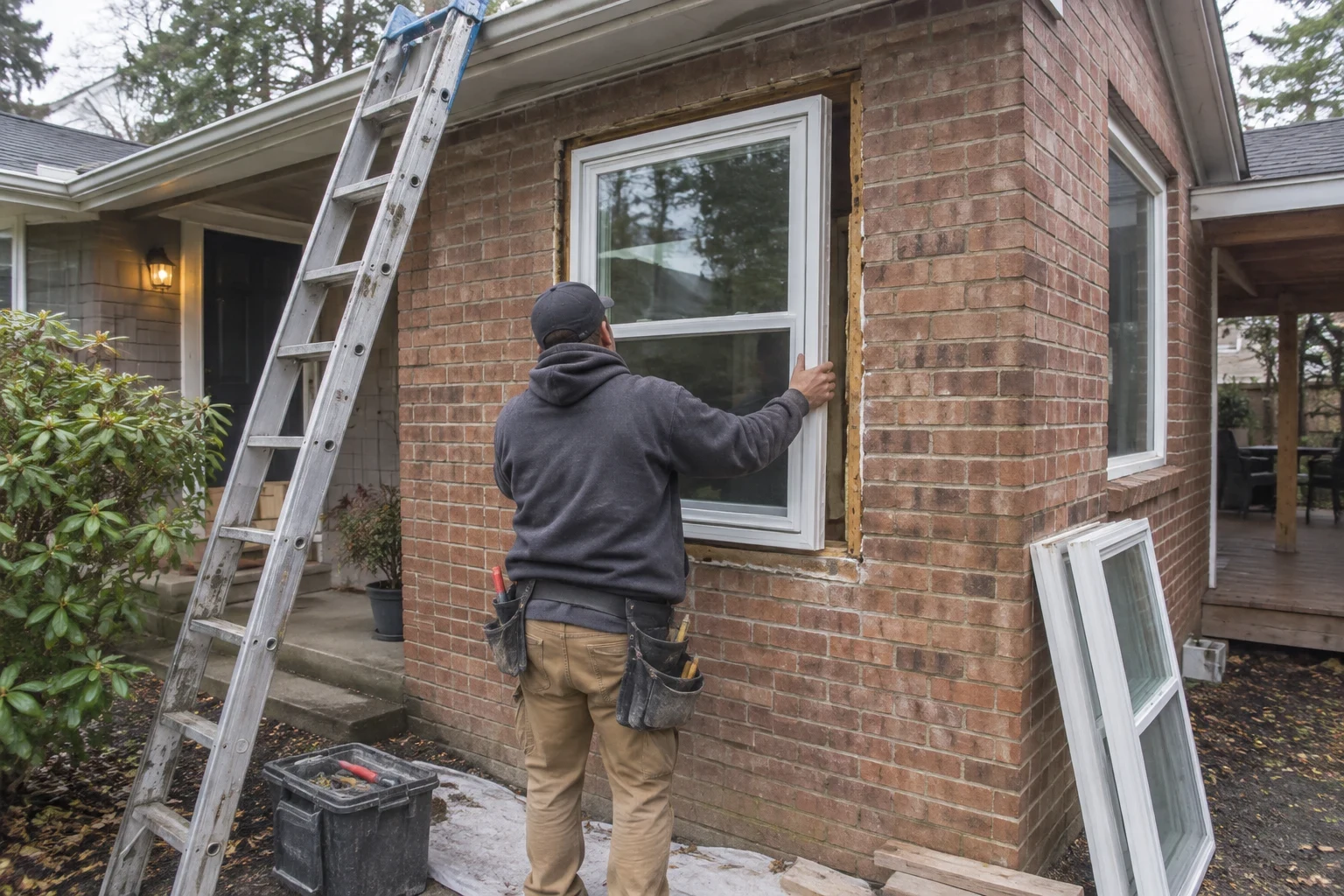
When replacement is the right call
A window is due for replacement when the problem lives in the unit itself: failed seals between the panes, frames that have warped or softened, sashes that no longer close tight. If the trouble is one cracked pane or a worn balance, our window repair service is often the smarter spend, and we will tell you so.
Many homes around Kirkland still have original aluminum or early vinyl windows that sweat and leak heat through months of gray, damp weather. Modern double- or triple-pane units with low-e coatings change how a room feels in January, and they quiet outside noise as well.
The window you choose matters, but the install matters just as much. Most early failures we see trace back to a missing sill pan, foam packed too tight or sealant smeared over a gap with nothing behind it. Those are the parts we slow down for.
What the work includes
- Measuring every opening
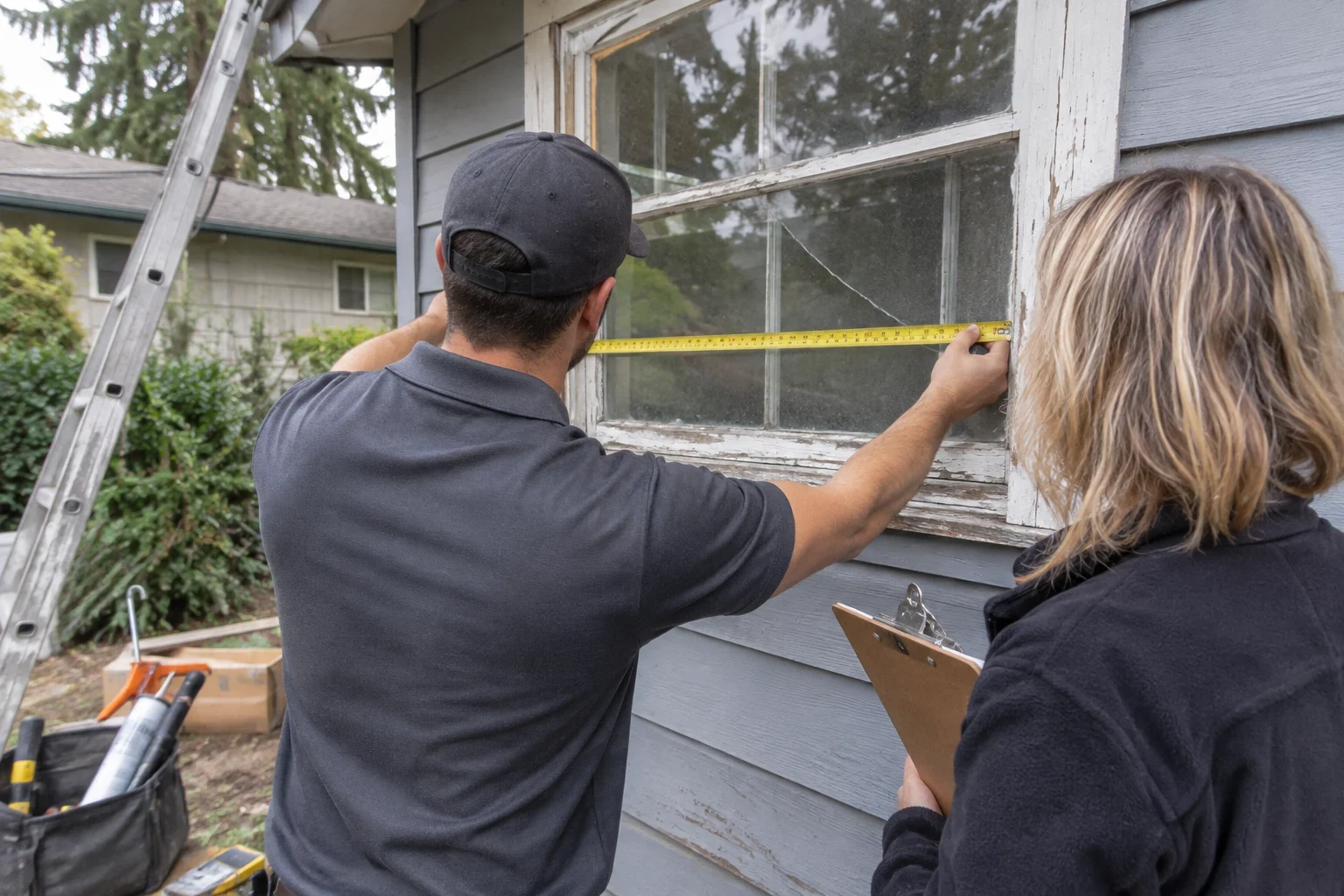
- We measure each opening at the top, middle and bottom and check it for square before ordering. Older framing is rarely perfect, and a window sized to the real opening sits straight without being forced.
- Insert or full-frame, explained
- An insert sets the new window inside the existing frame and keeps your interior trim. A full-frame install removes everything down to the rough opening so we can inspect and repair what is hidden. We explain which suits your windows and why.
- Sill pans and flashing
- Water that slips past a window needs a way back out. We set a sloped sill pan and lap the flashing shingle-style, so each upper layer sheds over the one below.
- Insulation and sealant done properly
- Gaps around the frame get low-expansion foam that will not bow the jambs. Outside, we use backer rod and a flexible sealant sized to the joint, so it can move with the seasons without tearing.
- Trim, finish and cleanup
- Trim is fitted, caulked and left ready for paint or finished to match. Floors are covered while we work, old windows are hauled away, and we vacuum before we leave.
- Hardware and operation check
- Before we call a window done, we run each sash, test every lock and adjust the operation until it opens smoothly with one hand.
Signs your windows are ready to go
Fog between the panes
A milky haze sealed inside double-pane glass tells you the edge seal has broken and the insulating gas has leaked out. Wiping the inside of the glass will never clear it.
Drafts you can feel
If a curtain moves near a closed window, air is getting around the sash or frame. New weatherstripping buys time, but a warped frame needs replacing.
Soft wood or stained sills
Dark stains, peeling paint or wood that gives under your thumb point to water getting in. Catching it early can keep rot from reaching the framing.
Sashes that stick or will not lock
Windows that bind, drop or refuse to latch are a daily annoyance and a security gap. When parts are no longer made for an older unit, replacement is usually the practical answer.
Water pooling on the glass
Heavy condensation on the inside of single-pane or aluminum windows through the wet months means cold glass and frames. Left alone, it stains sills and feeds mildew.
What shapes the price
We build each quote from your actual openings, which is why two homes with the same window count can land at quite different totals. Every window and every line of work is itemized on its own, so nothing is bundled out of sight. If paying over time suits you better, we offer flexible payment options.
Size and style
Large picture windows, bays and casements with more hardware cost more than standard sliders or single-hungs.
Frame material and glass
Vinyl sits at the lower end, while fiberglass and wood-clad frames cost more and age differently over the years. Triple-pane glass and specialty coatings raise the total, as does tempered glass where code calls for it.
Insert versus full-frame
A full-frame install takes more labor and new trim. It is also the only way to repair damaged framing or change the size of an opening.
What we find underneath
Rot in a sill or the framing has to be fixed before a new window goes in. We photograph anything we uncover and go over the cost with you before any of that work starts.
Access and height
Second-story and hard-to-reach windows need ladders or staging, which adds time.
How a replacement day runs
- 1
Consultation and measuring
We look at each window inside and out and talk through styles, frame materials and glass. You get a written, line-item quote and no pressure to decide that day.
- 2
Ordering your windows
Each window is built to the measurements we took. We confirm the order with you and schedule the install once the units arrive.
- 3
Install day
Floors and furniture near each opening get covered first, then we take out the old window and check the framing behind it. Only one opening is out at any moment, which keeps rain, cold and dust out of the rest of the house. Most installs are finished in a single day.
- 4
Walk-through together
Before we pack up, we open, close and lock every window with you, point out the finish details and leave simple care notes for the new units.
Window replacement questions
Does every window have to be replaced in one project?
Not at all. Plenty of people begin with the windows in the roughest shape, or a single wall of the house, and finish the rest in a later season. We keep a record of the styles and finishes we installed so the next round matches the first. Grouping several windows into one order can sometimes bring the cost per window down.
Will replacement damage my walls or trim?
An insert install leaves most interior and exterior trim where it is. A full-frame install takes off the trim around the opening, and we refit or replace it, seal it and leave it ready for paint. Floors and furnishings stay covered the whole time.
Which frame material holds up best in our wet climate?
Vinyl handles moisture well and costs the least. Fiberglass is stiffer and stays stable through temperature swings, which helps on larger openings. Wood-clad gives you a warm wood interior behind a protective exterior skin. We bring samples and lay out the trade-offs plainly.
Do I need a permit for new windows?
Some window projects need one, especially when an opening changes size or a full-frame job touches structure. When a permit applies, we pull it and schedule the inspection, and that cost is listed on your quote.
How long will the work take?
Most of the wait is for your windows to be built. Once they arrive, the install itself usually takes one day for most homes. A house with many openings, or a job where we uncover framing that needs repair, may run to a second day, and we set out a realistic schedule during the consultation.
Let's look at your windows together
We will measure, explain your options and give you a free quote to think over at your own pace. No pressure, and no obligation to go ahead.